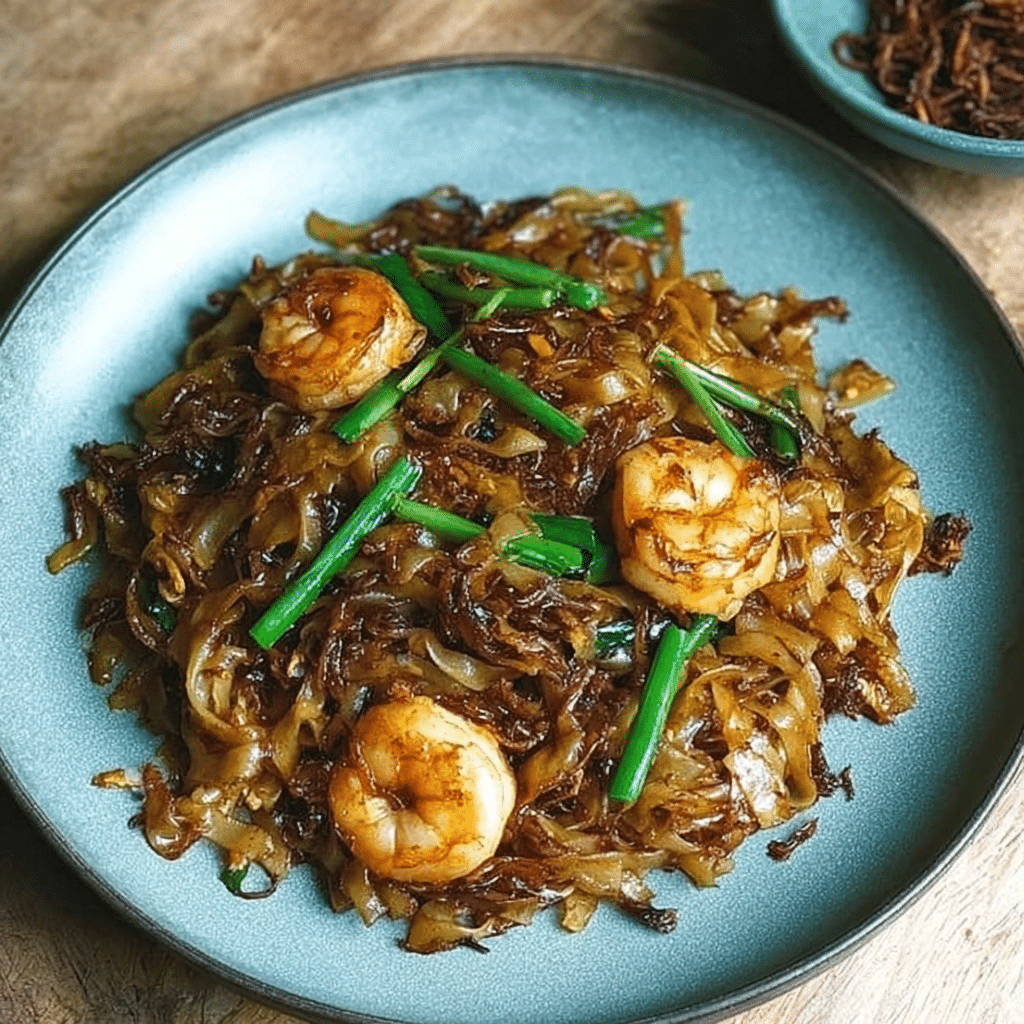
There are noodle dishes, and then there’s Char Kuey Teow. This iconic Malaysian street food is the king of stir-fried noodles—smoky, savory, slightly sweet, and utterly addictive. Imagine wide, flat rice noodles with charred edges, caramelized in a sticky, umami-packed sauce made from fish sauce, dark soy, sweet soy, and oyster sauce. Tossed with plump shrimp (or cockles), fresh bean sprouts, garlic chives, and a scrambled egg, every bite is a symphony of textures and flavors.
The magic of Char Kuey Teow is that elusive “wok hei”—the breath of the wok. That smoky, slightly charred flavor that can only come from cooking over screaming-hot heat. And while you might not have a restaurant-grade wok burner at home, this recipe gets you as close as possible. The key is preparation: everything must be chopped, measured, and ready to go before you turn on the heat. Because once you start cooking, it’s a fast, furious, beautiful dance. Let’s wok and roll.
Why You’ll Love This Recipe
- Authentic Malaysian street food at home – That sweet, savory, smoky flavor is spot-on.
- Fast and furious – From wok to plate in under 10 minutes of active cooking.
- Incredible umami depth – Fish sauce, oyster sauce, sweet soy, and dark soy create an unforgettable sauce.
- Customizable protein – Shrimp is easiest to find; cockles are traditional. Both work beautifully.
- That sought-after wok hei – This recipe teaches you how to maximize smoky char at home.
Ingredients
Mise en place is everything here. Have everything measured, chopped, and ready next to the stove before you start.
- 2 servings fresh flat rice noodles (kuey teow) – Wide, flat, and silky. Fresh is vastly superior to dried. Find them in the refrigerated section of Asian grocery stores. If using dried, soak according to package directions.
- 4 garlic cloves, minced – Pungent, aromatic, essential.
- ½ cup bean sprouts – Crisp, fresh, and lightly crunchy. Adds texture and brightness.
- ½ cup garlic chives (or regular chives), cut into 2-inch lengths – Garlic chives are slightly wider and have a mild garlic flavor. Regular chives work in a pinch.
- Sriracha or chili paste (optional) – For heat. Traditional Char Kuey Teow isn’t spicy, but many love a kick.
- 2 eggs – Scrambled into the noodles. Adds richness and body.
- Cockles or shrimp, as desired (about 6–8 large shrimp or ½ cup cockles) – Shrimp are easier to find and delicious. Cockles (blood clams) are traditional in Malaysia.
- Neutral oil (vegetable, canola, or avocado oil) – For high-heat stir-frying. Don’t skimp.
For the sauce (combine in a small bowl before cooking)
- 1½ tbsp fish sauce – Salty, funky, umami-rich. The backbone of the savory flavor.
- ½ tbsp dark soy sauce – Thick, slightly sweet, and intensely dark. Adds color and depth. Not the same as regular soy sauce.
- 3 tbsp sweet soy sauce (kecap manis) – Thick, sticky, and sweet. Essential for that characteristic Char Kuey Teow flavor.
- 3 tbsp oyster sauce – Savory, slightly sweet, and deeply umami. Vegetarian oyster sauce (made from mushrooms) works beautifully.
For serving (optional): Sambal oelek or chili paste on the side.
How to Make Char Kuey Teow
Before You Start: Prep Everything
Char Kuey Teow cooks fast. You will not have time to chop, measure, or search for ingredients once the wok is hot.
- Make the sauce: Combine fish sauce, dark soy sauce, sweet soy sauce, and oyster sauce in a small bowl. Set aside.
- Prepare the protein: Rinse shrimp or cockles under cold water, pat dry, and set aside.
- Prepare the vegetables: Cut garlic chives to the same length as the bean sprouts (about 2 inches). Place both in a bowl of water. Do not drain. The water clinging to them creates steam that helps the noodles cook.
- Prepare the noodles: If using fresh noodles and they’re stuck together, microwave them in 30-second intervals, gently separating with your fingers between intervals. Do not overheat—just warm enough to loosen.
- Mince the garlic. Set aside.
- Crack the eggs into a small bowl, ready to add.
Now you’re ready.
Heat the Wok
Place a wok or large, heavy-bottomed skillet over the highest heat your stove can produce. Let it get screaming hot—you should see a wisp of smoke. Add 2 tablespoons of neutral oil and swirl to coat.
Sauté the Aromatics
Add the minced garlic. Sauté for just 10–15 seconds, stirring constantly, until fragrant. Do not let it burn. If using chili paste or sriracha, add it now and stir for 5 seconds.
Cook the Protein
Add the shrimp (or cockles). Sauté for 15–20 seconds. Shrimp should just start to turn pink and curl. Cockles will open slightly. Do not overcook—they will finish in the noodles.
Add the Vegetables (with their water)
Add the bean sprouts and garlic chives directly from their soaking water. The water clinging to them will hit the hot wok and create steam. Sauté for 15–20 seconds. The vegetables should still be crisp but slightly wilted.
Add Noodles and Sauce
Add the loosened noodles to the wok. Pour the sauce over everything. Using a spatula or wok turner, toss and stir vigorously to combine, about 30–45 seconds. The noodles should absorb the sauce and start to char slightly at the edges.
Add the Egg
Push the noodle mixture to one side of the wok, creating an empty space. Crack the egg directly into that empty space. Let it set for 10 seconds, then scramble it gently with your spatula. Once the egg is partially cooked (but still slightly runny), mix it into the noodles. The egg will coat the noodles and add richness.
Finish and Serve
Continue tossing for another 15–20 seconds. The noodles should be glossy, deeply colored, and slightly charred in spots. Turn off the heat immediately. Serve the Char Kuey Teow hot, straight from the wok, with optional sambal or chili paste on the side.
Do not linger. Char Kuey Teow is at its absolute best within minutes of cooking. Serve immediately.
Tips for Success
- High heat is non-negotiable – Char Kuey Teow needs intense heat to achieve that smoky wok hei. Crank your burner to the maximum setting. If your stove is weak, cook in smaller batches.
- Don’t drain the bean sprouts – The water clinging to the bean sprouts and chives creates steam that helps cook the noodles evenly and prevents them from drying out.
- Fresh noodles are essential – Dried rice noodles can be used in a pinch, but fresh flat rice noodles (kuey teow) have the right texture. Find them in the refrigerated section of Asian grocery stores.
- Work quickly – Have everything within arm’s reach. Once the cooking starts, it’s a 2-minute sprint. Read the recipe through twice before you begin.
- Don’t overcrowd the wok – This recipe is for 2 servings. If you’re making 4 servings, cook in two separate batches. Overcrowding cools the wok and steams the noodles instead of charring them.
- Use a wok if you have one – The curved shape allows food to be pushed up the sides and tossed easily. A large, heavy-bottomed skillet works, but a wok is ideal.
Equipment Needed
- Wok (carbon steel is best) or large, heavy-bottomed skillet (12-inch or larger)
- Wok spatula or flat wooden spatula (for tossing)
- Small bowls for sauce and eggs
- Cutting board and sharp knife
- Microwave (for loosening noodles, optional)
- Colander (if using dried noodles)
No wok? A large cast-iron skillet gets very hot and retains heat well, which helps create char. Avoid non-stick pans—they can’t handle the high heat needed for wok hei.
Recipe Variations
Vegetarian Char Kuey Teow – Use vegetarian oyster sauce (made from mushrooms) or substitute with additional sweet soy sauce. Swap shrimp for fried tofu puffs or extra-firm tofu (pan-fried first). Use vegetable broth powder to boost umami. The texture will differ, but the flavor is still delicious.
Extra Spicy Char Kuey Teow – Add 1–2 tablespoons of sambal oelek or chili garlic paste along with the garlic. For intense heat, add 2 finely chopped Thai bird’s eye chilies. Serve with extra sambal on the side.
Chicken Char Kuey Teow – Substitute thinly sliced boneless chicken thigh for the shrimp. Sear the chicken first (about 1 minute), remove from wok, then add back with the noodles. Chicken needs slightly longer cooking than shrimp.
Char Kuey Teow with Chinese Sausage (Lap Cheong) – Add ¼ cup of thinly sliced Chinese sausage along with the garlic. The sweet, savory, slightly fatty sausage is a classic addition in some Malaysian versions.
Seafood Char Kuey Teow – Use a mix of shrimp, squid (calamari rings), and scallops. Sauté squid for 20 seconds, scallops for 30–40 seconds. Do not overcook seafood—it becomes rubbery.
No-Kecap Manis Substitute – If you can’t find sweet soy sauce (kecap manis), make your own: combine 3 tablespoons regular soy sauce with 1½ tablespoons brown sugar or palm sugar. Heat gently until sugar dissolves.
Serving Suggestions
Char Kuey Teow is a complete meal on its own, but it loves simple accompaniments:
- Sambal oelek or chili paste – For those who want extra heat at the table.
- Lime wedges – A squeeze of fresh lime brightens the rich, savory noodles beautifully.
- Cucumber slices – Cool, crisp cucumber balances the smoky, savory flavors.
- Fried shallots – Sprinkle over the top for extra crunch and sweetness.
- Ice-cold beer – A refreshing lager or pale ale is the perfect pairing for spicy, savory street food.
For a beautiful presentation, serve the noodles in a shallow bowl piled high, with shrimp arranged on top, a sprinkle of fresh chives, and a lime wedge on the side.
FAQs
What is “wok hei” and how do I achieve it at home?
Wok hei (breath of the wok) is the smoky, slightly charred flavor from cooking over intense heat. At home, use your highest heat setting, avoid overcrowding the wok, and cook in small batches. A cast-iron skillet retains heat better than a non-stick pan. If you have a gas stove, it’s easier to achieve than electric.
What are “fresh flat rice noodles” and where do I find them?
Fresh flat rice noodles (kuey teow, also spelled hor fun) are wide, flat, white noodles sold in the refrigerated section of Asian grocery stores. They’re usually vacuum-sealed in plastic. Dried rice sticks (the kind used in pad thai) are not the same—they’re thinner and have a different texture.
Can I use dried rice noodles instead of fresh?
Yes, but the texture will be different. Use wide, flat dried rice noodles (sometimes labeled “dried hor fun”). Soak in hot water until pliable but not fully soft, then drain. Dried noodles are more delicate and break easily; handle gently.
What’s the difference between dark soy sauce and regular soy sauce?
Dark soy sauce is aged longer, thicker, sweeter, and less salty than regular soy sauce. It’s used primarily for color and depth. Regular soy sauce is thinner and saltier. Do not substitute one for the other without adjusting the recipe.
Is oyster sauce vegetarian?
Traditional oyster sauce contains oysters. However, many brands now offer vegetarian oyster sauce made from mushrooms—look for “vegetarian oyster sauce” or simply use an extra tablespoon of sweet soy sauce. The flavor will be slightly different but still delicious.
Can I add other vegetables?
Traditionally, Char Kuey Teow uses only bean sprouts and garlic chives. For variation, try baby bok choy, snap peas, or broccoli stems (thinly sliced). Avoid watery vegetables like zucchini, which will steam the noodles.
Why are my noodles sticking together?
Fresh rice noodles often stick together in the package. Microwave them for 30-second intervals, gently separating with your fingers between intervals. You can also run them under warm water and drain carefully. Once in the wok, the hot oil and sauce will help separate them further.
How do I store and reheat leftovers?
Char Kuey Teow is best eaten immediately. Leftovers can be stored in an airtight container in the refrigerator for up to 2 days. Reheat in a very hot wok or skillet with a splash of water or soy sauce—the microwave will make the noodles mushy. The wok hei will be gone, but the flavor remains.
Final Thoughts
Char Kuey Teow is more than a noodle dish. It’s a sensory experience—the sizzle of the wok, the fragrant cloud of garlic and fish sauce, the sight of flat noodles turning glossy and dark, the first smoky, savory, chewy bite. It’s Malaysian street food at its finest, and now it’s your kitchen’s finest too.
The key is preparation. Embrace the chaos of mise en place. Chop your chives. Measure your sauces. Loosen your noodles. Then turn that heat to high and commit. In less than two minutes, you’ll have a plate of noodles that transports you straight to a hawker stall in Penang.
So grab your wok. Crank that burner. And get ready for the most satisfying stir-fry of your life.
Made this Char Kuey Teow? I’d love to hear about it. Leave a comment, share a photo, or tell me how you achieved your wok hei. Happy cooking!
Print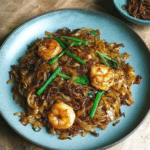
Char Kuey Teow – Smoky Malaysian Stir-Fried Noodles (Authentic Recipe)
- Total Time: 20 minutes
- Yield: 2 servings
Description
Char Kuey Teow is a smoky Malaysian stir-fried noodle dish made with flat rice noodles, seafood, garlic, eggs, and a rich savory-sweet sauce.
Ingredients
- 2 servings fresh flat rice noodles
- 4 garlic cloves, minced
- ½ cup bean sprouts
- ½ cup garlic chives
- Sriracha or chili paste (optional)
- 2 eggs
- Cockles or shrimp, as desired
- 1.5 tbsp fish sauce
- ½ tbsp dark soy sauce
- 3 tbsp sweet soy sauce
- 3 tbsp oyster sauce
Instructions
- Combine all sauce ingredients in a bowl and set aside.
- Rinse cockles or shrimp and prepare ingredients.
- Cut chives and soak bean sprouts and chives in water (do not drain).
- Loosen rice noodles if needed by warming briefly.
- Heat oil in a wok over high heat.
- Add garlic and sauté 10–15 seconds, add chili paste if using.
- Add cockles or shrimp and cook briefly.
- Add bean sprouts and chives with their water; stir fry quickly.
- Add noodles and sauce; mix well.
- Push noodles aside, crack egg, scramble, then mix through.
- Turn off heat and serve immediately.
Notes
- Use very high heat for authentic smoky flavor (“wok hei”).
- Do not overcook vegetables to keep crunch.
- Adjust chili paste for spice level.
- Best eaten immediately after cooking.
- Prep Time: 10 minutes
- Cook Time: 10 minutes
- Category: Main Course, Noodles
- Method: Stir Fry
- Cuisine: Malaysian