Introduction
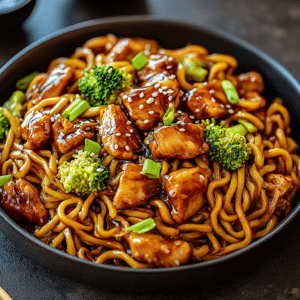
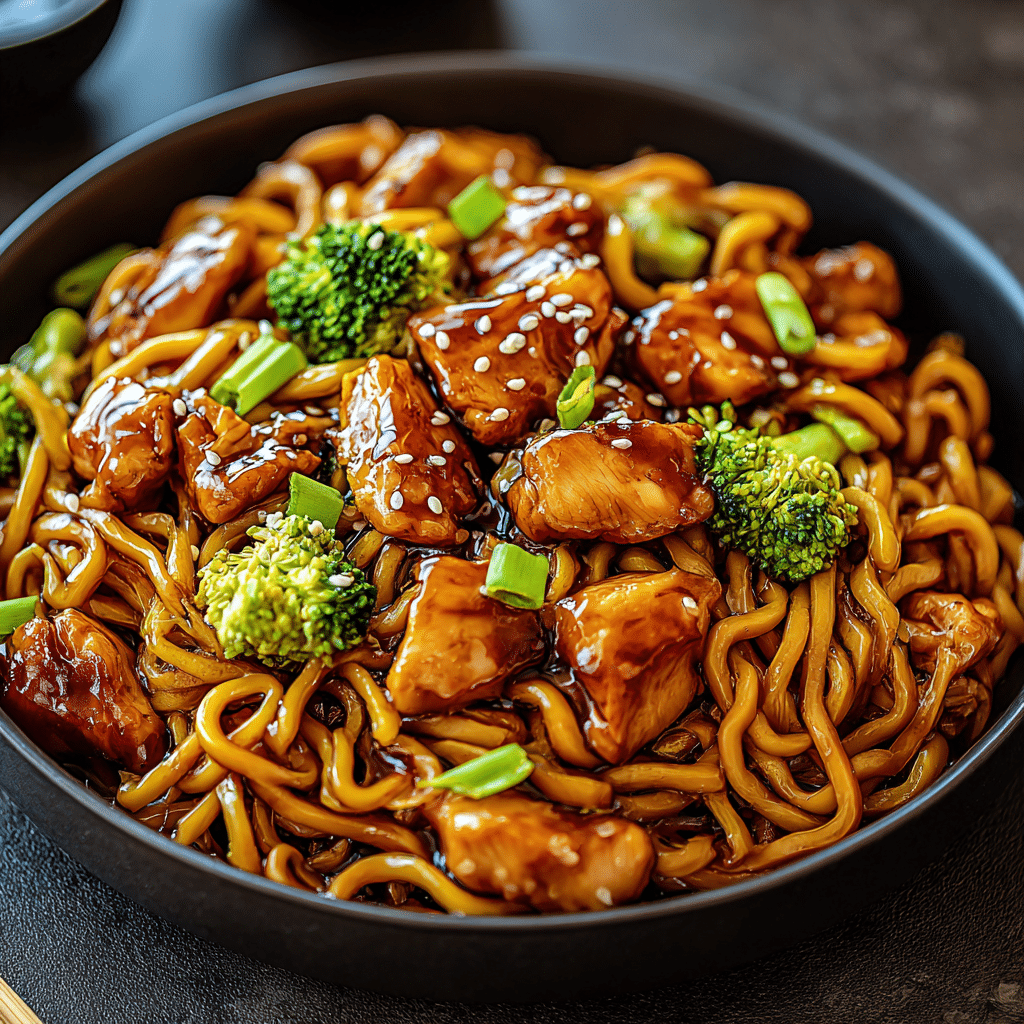
There are certain meals that define the weeknight dinner ideal: fast, flavorful, satisfying, and endlessly customizable. Chicken Teriyaki Noodles check every single box. This is the dish you turn to when you crave the sweet-savory umami of Japanese-inspired teriyaki but want something heartier than chicken and rice. By tossing tender, golden-brown chicken, crisp-tender vegetables, and springy egg noodles in a homemade teriyaki sauce, you create a complete meal that comes together in a single skillet or wok in under 30 minutes.
Teriyaki is one of the most beloved Japanese culinary exports, and for good reason. The word “teriyaki” refers to a cooking technique: “teri” means luster or shine, and “yaki” means grill or broil. Traditional teriyaki involves grilling meat that has been brushed with a glaze of soy sauce, mirin, and sugar. This recipe adapts that classic flavor profile for the stir-fry pan, creating a glossy, thick sauce that clings to every strand of noodle and every slice of chicken. The sauce strikes a perfect balance: salty from the soy sauce, sweet from honey (or maple syrup), tangy from rice vinegar, and aromatic from fresh garlic and ginger. A cornstarch slurry gives it that signature silky, clinging consistency.
The beauty of this recipe lies in its flexibility. You can use egg noodles for a chewy, satisfying texture or rice noodles for a lighter, gluten-free option. The vegetable combination—bell peppers, broccoli, and carrot—is a classic, but you can easily substitute whatever you have on hand: snap peas, mushrooms, bok choy, or zucchini all work beautifully. The chicken can be swapped for shrimp, beef, or tofu. And because everything cooks in one pan, cleanup is minimal.
This is better-than-takeout cooking at its finest. No mystery ingredients, no excessive sodium, no soggy noodles delivered in a plastic container. Just fresh, vibrant, deeply flavorful food made in your own kitchen.
In this article, you will find a comprehensive guide to making Chicken Teriyaki Noodles from scratch. We will cover ingredient selection, step-by-step preparation, expert tips for achieving the perfect sauce and noodle texture, storage instructions, and detailed answers to frequently asked questions.
Ingredients
Before you begin, gather all of your ingredients. Because stir-frying moves quickly, having everything prepped and within reach is essential. Below is the complete list, organized by component.
For the Noodles and Stir-Fry
| Ingredient | Quantity | Notes |
|---|---|---|
| Egg noodles or rice noodles | 8 ounces | Egg noodles for chew; rice noodles for gluten-free |
| Boneless, skinless chicken breasts | 1 pound | Sliced thinly against the grain |
| Vegetable oil | 2 tablespoons | Canola, avocado, or peanut oil also work |
| Bell peppers (red, yellow, or green) | 1 cup | Sliced into strips |
| Broccoli florets | 1 cup | Bite-sized pieces |
| Carrot | 1 | Julienned (cut into thin matchsticks) |
| Green onions | 3 | Sliced (white and green parts) |
| Sesame seeds | ¼ cup | Optional, for garnish |
For the Teriyaki Sauce
| Ingredient | Quantity | Notes |
|---|---|---|
| Soy sauce (or tamari for gluten-free) | ½ cup | Reduced-sodium recommended |
| Honey or maple syrup | ¼ cup | Honey for classic sweetness; maple for vegan |
| Rice vinegar | 2 tablespoons | Unseasoned |
| Cornstarch | 2 teaspoons | Mixed with 2 tablespoons water (slurry) |
| Garlic | 1 teaspoon | Minced fresh |
| Ginger | 1 teaspoon | Minced fresh (or ½ teaspoon ground) |
Preparation Method
Step 1: Cook the Noodles
Bring a large pot of salted water to a boil. Cook the 8 ounces of egg noodles or rice noodles according to the package instructions.
- Egg noodles: Typically take 3 to 5 minutes. Cook until al dente (firm to the bite).
- Rice noodles: Often require soaking in hot water rather than boiling. Follow package directions carefully.
Once cooked, drain the noodles in a colander. Do not rinse them—rinsing removes the surface starch that helps the sauce adhere. If you are not using the noodles immediately, toss them with a tiny drizzle of oil to prevent sticking. Set aside.
Step 2: Make the Teriyaki Sauce
In a small bowl, combine the sauce ingredients except the cornstarch slurry:
- ½ cup soy sauce (or tamari)
- ¼ cup honey or maple syrup
- 2 tablespoons rice vinegar
- 1 teaspoon minced garlic
- 1 teaspoon minced ginger
Whisk to combine.
In a separate tiny bowl, make the cornstarch slurry: mix 2 teaspoons cornstarch with 2 tablespoons water until smooth and lump-free.
Set both aside. You will add the slurry to the sauce later, after the vegetables are cooked.
Step 3: Prepare the Chicken
Slice 1 pound of boneless, skinless chicken breasts into thin, bite-sized strips. For the most tender results, slice against the grain (perpendicular to the muscle fibers). The strips should be about ¼ inch thick and 1 to 2 inches long.
Pat the chicken slices completely dry with paper towels. This helps them brown rather than steam.
Optional: Lightly season the chicken with a pinch of salt and pepper, though the teriyaki sauce will provide plenty of flavor.
Step 4: Cook the Chicken
Place a large skillet or wok over medium-high heat. Add 2 tablespoons of vegetable oil and swirl to coat the bottom. Heat until the oil is shimmering (about 30 seconds).
Add the sliced chicken in a single layer. Do not overcrowd—if necessary, cook in two batches. Overcrowding lowers the temperature and causes steaming instead of browning.
Cook the chicken for 5 to 7 minutes, stirring occasionally, until it is:
- Golden brown on the outside
- Fully cooked through (no pink inside)
- Reaching an internal temperature of 165°F (74°C)
Use a slotted spoon or tongs to transfer the cooked chicken to a clean plate. Leave the remaining oil and browned bits in the skillet—they are packed with flavor.
Step 5: Cook the Vegetables
Return the skillet to medium-high heat (add a tiny splash more oil if the pan looks dry). Add:
- 1 cup sliced bell peppers
- 1 cup broccoli florets
- 1 julienned carrot
Stir-fry for 3 to 4 minutes, stirring constantly. The vegetables should be tender but still crisp—bright in color with a slight crunch. Do not overcook; soggy vegetables have no place in a good stir-fry.
Step 6: Combine Chicken, Noodles, and Sauce
Return the cooked chicken to the skillet with the vegetables. Add the cooked noodles.
Whisk the cornstarch slurry again (it settles quickly), then pour it into the teriyaki sauce mixture. Stir to combine.
Pour the teriyaki sauce (now with the slurry) over the noodles, chicken, and vegetables.
Toss everything together using tongs or two spatulas. Cook for an additional 2 to 3 minutes, stirring constantly, until:
- The sauce thickens into a glossy, clingy glaze.
- Everything is heated through.
- The noodles are evenly coated.
If the sauce becomes too thick, add a splash of water (1 to 2 tablespoons) to loosen it. If it is too thin, cook for another minute or add a tiny bit more cornstarch slurry.
Step 7: Garnish and Serve
Remove the skillet from the heat. Transfer the Chicken Teriyaki Noodles to serving bowls or a large platter.
Garnish with:
- Sliced green onions (white and green parts)
- ¼ cup sesame seeds (optional, for nuttiness and visual appeal)
Serve immediately while hot. The dish is complete on its own but also pairs beautifully with a side of edamame, dumplings, or a simple cucumber salad.
Expert Tips for Perfect Chicken Teriyaki Noodles
- Use fresh garlic and ginger. Ground powders cannot replicate the bright, pungent, aromatic quality of fresh. Take the extra 60 seconds to mince fresh garlic and grate fresh ginger.
- Do not overcook the vegetables. Stir-fried vegetables should be crisp-tender, not limp or mushy. Cook just until they turn bright in color and soften slightly—about 3 to 4 minutes.
- Slice chicken against the grain. Cutting perpendicular to the muscle fibers shortens them, resulting in tender, easy-to-chew meat. Slicing with the grain produces long, chewy strands.
- Make extra sauce. The sauce recipe makes enough to generously coat the noodles, but if you like your noodles extra saucy, double the sauce ingredients (keep the cornstarch slurry the same).
- Adjust sweetness and saltiness to your taste. This recipe balances sweet (honey/maple) and salty (soy sauce). For a sweeter sauce, add an extra tablespoon of honey. For a saltier sauce, add an extra tablespoon of soy sauce or a pinch of salt.
- Toast the sesame seeds. Raw sesame seeds have little flavor. Toast them in a dry skillet over medium heat for 2 to 3 minutes, shaking frequently, until golden and fragrant. Let them cool before using.
Storage and Reheating
Refrigeration: Store leftovers in an airtight container in the refrigerator for up to 4 days. The noodles will absorb some sauce overnight, becoming softer but still delicious.
Freezing: Freezing is not recommended for this dish. The texture of the noodles (especially egg noodles) becomes mushy upon thawing, and the vegetables lose their crispness.
Reheating (stovetop): The best method. Reheat in a skillet over medium heat, adding a splash of water or soy sauce to loosen the sauce. Stir-fry for 3–4 minutes until heated through.
Reheating (microwave): Quick but softens the noodles. Microwave individual portions on medium power for 60–90 seconds, stirring halfway through.
Reheating (air fryer): Not recommended for noodles, as they dry out and become brittle.
Conclusion
Chicken Teriyaki Noodles are the ultimate weeknight victory. They come together faster than takeout delivery, taste infinitely fresher, and cost a fraction of the price. The homemade teriyaki sauce—with its perfect balance of salty, sweet, tangy, and aromatic—transforms simple ingredients into something extraordinary. The chicken is golden and juicy. The vegetables are crisp and vibrant. The noodles are springy and satisfying. And the entire dish glistens with that signature teriyaki sheen.
What makes this recipe so rewarding is its adaptability. Once you master the basic technique—cook noodles, make sauce, stir-fry chicken, add vegetables, combine—you can swap in any protein, any vegetable, any noodle. It becomes a template for endless variations, a reliable foundation for using up whatever is in your refrigerator.
So slice that chicken, mince that ginger, and get ready to make a stir-fry that will have you swearing off takeout containers forever. Your wok (or skillet) is waiting.
Frequently Asked Questions (FAQ)
1. Can I use chicken thighs instead of chicken breasts?
Absolutely. Boneless, skinless chicken thighs are more forgiving and stay juicier than breasts. Slice them thinly against the grain. Follow the same cooking instructions (5–7 minutes). Thighs are fully cooked at 165°F but remain tender up to 175°F.
2. Can I use a different type of noodle?
Yes. All of the following work well:
- Lo mein noodles (classic Chinese takeout style)
- Udon noodles (thick, chewy, excellent)
- Soba noodles (buckwheat, nutty flavor)
- Spaghetti or linguine (in a pinch)
- Zucchini noodles (zoodles) (low-carb; add at the very end)
Adjust cooking times according to package instructions.
3. Can I make this recipe gluten-free?
Yes. Use:
- Rice noodles or gluten-free egg noodles
- Tamari instead of soy sauce (tamari is gluten-free soy sauce)
- Rice vinegar is naturally gluten-free
- Ensure your cornstarch is labeled gluten-free (most are)
4. Can I make this recipe vegan?
Yes. Substitute:
- Chicken: Use extra-firm tofu (pressed, cubed, and pan-fried), tempeh, or seitan
- Honey: Use maple syrup or agave nectar
- Soy sauce is vegan; use tamari if avoiding wheat
Follow the same cooking instructions, adjusting cooking times as needed for your protein.
5. How do I prevent the noodles from sticking together?
Three tips:
- Do not overcook the noodles (cook al dente).
- Do not rinse the noodles after draining (starch helps sauce adhere, but excess starch causes sticking).
- Toss cooked noodles with a tiny drizzle of oil if they will sit for more than a few minutes.
6. My sauce is too thin. What went wrong?
Thin sauce is usually caused by:
- Not enough cornstarch slurry (ensure you used 2 teaspoons cornstarch + 2 tablespoons water)
- Slurry not added (easy to forget!)
- Insufficient cooking time after adding slurry (needs 1–2 minutes to thicken)
To fix, make an additional slurry (1 teaspoon cornstarch + 1 tablespoon water) and stir into the hot sauce.
7. My sauce is too thick. How can I thin it?
Add warm water, chicken broth, or additional soy sauce 1 tablespoon at a time, stirring until the desired consistency is reached. Do not add cold water, which can cause the sauce to seize.
8. Can I add other vegetables?
Absolutely. This recipe welcomes vegetables. Add them during the stir-fry step:
- Snap peas or snow peas (cook 2 minutes)
- Mushrooms (sliced; cook 3–4 minutes)
- Bok choy (chopped; cook 2–3 minutes)
- Zucchini (sliced; cook 2–3 minutes)
- Bean sprouts (add at the very end; cook 30 seconds)
9. Can I use bottled teriyaki sauce instead of homemade?
Yes, but homemade is strongly recommended for superior flavor and control over ingredients. If using bottled, you will need about ¾ to 1 cup. Skip the cornstarch slurry unless the bottled sauce is very thin.
10. How do I julienne a carrot?
Julienning means cutting into thin, matchstick-sized strips:
- Peel the carrot.
- Cut it into 2-inch segments.
- Slice each segment thinly lengthwise (about ⅛ inch thick).
- Stack the slices and slice them lengthwise again into thin strips.
A julienne peeler or mandoline makes this faster.
11. Can I make this dish ahead of time for meal prep?
Yes, with caveats. The noodles will absorb sauce and soften over time. For best results:
- Store the cooked chicken, vegetables, noodles, and sauce separately in the refrigerator.
- Combine and reheat in a skillet when ready to eat.
- Pre-assembled leftovers will keep for 2–3 days but will have a softer texture.
12. What should I serve with Chicken Teriyaki Noodles?
This dish is a complete meal on its own, but it pairs well with:
- Edamame (steamed and salted)
- Gyoza or potstickers (pan-fried or steamed)
- Cucumber salad (thinly sliced cucumbers with rice vinegar and sesame oil)
- Miso soup
- Spring rolls (fresh or fried)
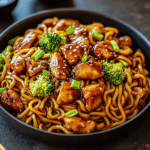
Chicken Teriyaki Noodles – A Better-Than-Takeout Stir-Fry in Under 30 Minutes
- Total Time: 25 minutes
- Yield: 4 servings
Description
Quick and flavorful Chicken Teriyaki Noodles made with tender chicken, crisp vegetables, and a sweet-savory homemade teriyaki sauce tossed with noodles for a perfect weeknight meal.
Ingredients
- 8 oz egg noodles or rice noodles
- 1 lb boneless, skinless chicken breasts, sliced
- 2 tbsp vegetable oil
- 1 cup bell peppers, sliced
- 1 cup broccoli florets
- 1 carrot, julienned
- 3 green onions, sliced
- 1/4 cup sesame seeds (optional)
- For the Sauce:
- 1/2 cup soy sauce
- 1/4 cup honey or maple syrup
- 2 tbsp rice vinegar
- 1 tsp garlic, minced
- 1 tsp ginger, minced
- 2 tsp cornstarch + 2 tbsp water
Instructions
- Cook noodles according to package instructions; drain and set aside.
- Whisk together soy sauce, honey, vinegar, garlic, ginger, and cornstarch mixture.
- Heat oil in skillet over medium-high heat and cook chicken 5–7 minutes until done.
- Add bell peppers, broccoli, and carrots; stir-fry 3–4 minutes.
- Add cooked noodles and pour in teriyaki sauce.
- Toss everything together and cook 2–3 minutes until heated through.
- Garnish with green onions and sesame seeds and serve.
Notes
- Use tamari for a gluten-free option.
- Add chili flakes for a spicy kick.
- Prep Time: 10 minutes
- Cook Time: 15 minutes
- Category: Main Dish
- Method: Stir-Fry
- Cuisine: Asian