Introduction
There are certain culinary combinations that transcend mere sustenance and enter the realm of cultural iconography. Peanut butter and jelly. Macaroni and cheese. Burgers and fries. And in the American South, few pairings are as beloved or as fiercely debated as fried chicken and biscuits. The perfect biscuit should be tall, tender, flaky, and buttery, with a golden crown and a soft, pillowy interior. The perfect fried chicken should be shatteringly crisp on the outside, impossibly juicy within, and seasoned so deeply that every bite sings. When these two elements come together, they create a handheld meal that is equal parts breakfast, lunch, and dinner—a sandwich that satisfies at any hour.
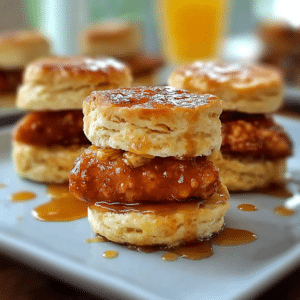
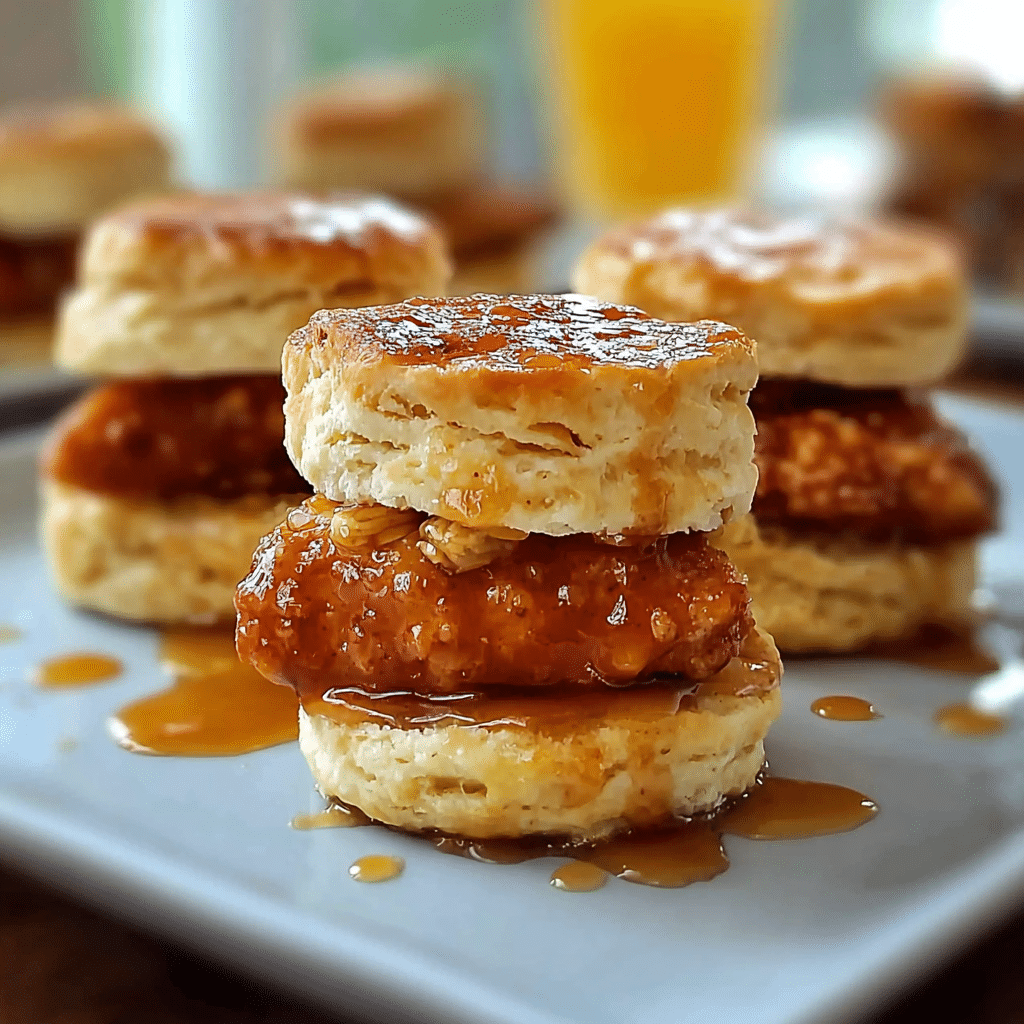
But what happens when you introduce a third element? What happens when you drizzle that golden, crunchy chicken with a sticky, spicy, sweet glaze that lingers on the lips and warms the throat? You get Hot Honey Chicken Biscuits: a dish that takes a classic Southern staple and propels it into contemporary crave-worthy territory. The hot honey is not merely a garnish; it is a transformative sauce. The sweetness of the honey tames the heat of the red pepper flakes, while a touch of apple cider vinegar cuts through the richness of the fried chicken and the butter in the biscuit. The result is a symphony of contrasts—crispy and soft, savory and sweet, cool and spicy—all contained within a few glorious bites.
This article will guide you through every component of this recipe with professional precision. We will begin by marinating boneless chicken thighs in tangy buttermilk, a step that guarantees tenderness and moisture. We will then construct a seasoned flour dredge that builds layers of flavor. We will fry the chicken to golden perfection, achieving that coveted crust. Next, we will turn to the biscuits, from-scratch masterpieces that rely on cold butter and gentle handling to achieve their signature flaky layers. Finally, we will craft a hot honey that can be customized to your personal heat tolerance. Whether you are a seasoned home cook or an enthusiastic beginner, this recipe will equip you with the techniques and knowledge to create a sandwich worthy of any brunch table or weeknight dinner.
Understanding the Ingredients: A Professional Breakdown
Before we begin cooking, let us examine each ingredient in detail. Understanding why each component is included will help you execute the recipe flawlessly and adapt it to your preferences.
For the Chicken
Boneless Skinless Chicken Thighs (4) or Breasts
Chicken thighs are the superior choice for frying, and here is why. Thighs contain more intramuscular fat and connective tissue than breasts. When cooked, this fat renders and keeps the meat incredibly moist and forgiving, even if you accidentally overcook them by a minute or two. Breasts, while leaner and preferred by some, dry out much more quickly. If you choose to use chicken breasts, pound them to an even ½-inch thickness before marinating to ensure uniform cooking. Thighs, however, are naturally uniform and virtually foolproof.
Buttermilk (1 cup) for tenderizing
Buttermilk is a culinary miracle for fried chicken. Its acidity comes from lactic acid, which gently breaks down the protein fibers in the chicken without turning the meat mushy (a risk with stronger acids like lemon juice or vinegar). This process, known as tenderizing, results in chicken that is exceptionally juicy and pulls apart easily. Additionally, buttermilk’s thick, viscous consistency clings to the chicken, creating a perfect foundation for the flour coating. For best results, use full-fat buttermilk. If you do not have buttermilk, you can make a substitute by adding 1 tablespoon of white vinegar or lemon juice to 1 cup of whole milk and letting it sit for 5 minutes.
All-Purpose Flour (1 cup)
All-purpose flour provides the structural foundation for the fried chicken’s crust. Its moderate protein content (10-12%) creates a coating that is crisp without being tough or overly dense. For an even crunchier crust, you could substitute ¼ cup of the flour with cornstarch or rice flour, which will increase crispiness. Do not use bread flour, as its higher protein content will create a chewy, bread-like crust rather than a delicate, shattering one.
Paprika (1 tsp)
Paprika contributes color and a mild, sweet pepper flavor. It does not add significant heat, but it gives the fried chicken that appetizing reddish-gold hue that signals deep, savory flavor. Smoked paprika can be substituted for a more robust, barbecue-like undertone, but be aware that it will change the flavor profile significantly.
Garlic Powder (1 tsp)
Garlic powder is a pantry workhorse. Unlike fresh garlic, which can burn during frying and become bitter, garlic powder disperses evenly through the flour and withstands high heat without scorching. It provides a warm, savory background note that complements both the chicken and the hot honey.
Salt (1 tsp) and Black Pepper (½ tsp)
Salt is non-negotiable. It penetrates the chicken during the buttermilk marinade and seasons the flour coating. One teaspoon for this quantity of chicken and flour is appropriate for a well-seasoned result. Black pepper adds gentle pungency. Always use freshly ground black pepper for the brightest, most aromatic flavor.
Vegetable Oil for Frying
Choose a neutral oil with a high smoke point. Canola, peanut, avocado, or refined vegetable oil are excellent choices. Peanut oil is particularly favored in Southern frying for its clean flavor and ability to reach high temperatures without smoking. Avoid olive oil, butter, or coconut oil for deep frying, as they have lower smoke points and will burn before the chicken is cooked through.
For the Biscuits
All-Purpose Flour (2 cups)
Again, all-purpose flour is ideal. Its protein content provides enough structure to support the biscuit’s rise without making it tough. Do not use self-rising flour unless you adjust the leavening agents, as self-rising flour already contains baking powder and salt.
Baking Powder (1 tbsp) and Baking Soda (½ tsp)
These two leavening agents work together. Baking powder provides the primary rise; one full tablespoon is a substantial amount, which is correct for tall, fluffy biscuits. Baking soda neutralizes the acidity of the buttermilk and provides additional browning. The combination ensures a biscuit that rises dramatically and develops a beautiful golden crust.
Salt (½ tsp)
A half teaspoon of salt in the biscuit dough seasons the flour and balances the richness of the butter. Do not skip it, or your biscuits will taste flat.
Cold Unsalted Butter (6 tbsp), cubed
Cold butter is the soul of a flaky biscuit. When small pieces of cold butter are cut into flour, they remain solid. During baking, the butter melts, releasing steam that creates pockets of air between layers of dough. This is what produces flakiness. Unsalted butter allows you to control the sodium level. The butter must be very cold—straight from the refrigerator, or even after 15 minutes in the freezer. Do not use softened or melted butter.
Buttermilk (¾ cup)
Buttermilk adds tang, tenderness, and moisture. Its acidity reacts with the baking soda to produce carbon dioxide bubbles, contributing to the biscuit’s lift. As with the chicken marinade, full-fat buttermilk yields the richest, most tender results.
Store-Bought Biscuits (optional)
This recipe includes an option for convenience. If you are short on time or prefer not to make dough from scratch, high-quality refrigerated or frozen biscuits can be used. However, homemade biscuits are significantly superior in flavor and texture, and the process is surprisingly quick once you master the technique.
For the Hot Honey
Honey (½ cup)
Honey provides the sweet foundation. Its floral, complex sweetness is the perfect counterpoint to spicy heat. Use a good quality honey—clover, orange blossom, or wildflower are all excellent. Avoid highly processed, corn-syrup-blended honey products, as they lack depth.
Red Pepper Flakes (1-2 tsp), adjust to taste
Red pepper flakes (crushed red pepper) deliver the heat. They contain seeds and dried chili flesh, which infuse the honey with a slow-building, tingling spiciness. One teaspoon will produce a mild warmth; two teaspoons will create a noticeable kick. For extreme heat, you could go up to 1 tablespoon, but taste as you go. You can also use cayenne pepper (start with ¼ teaspoon) for a more even, less seedy heat distribution.
Apple Cider Vinegar (1 tsp, optional, for tanginess)
This optional ingredient is a professional secret. A small amount of vinegar brightens the hot honey, cutting through the richness of the fried chicken and butter. It prevents the honey from tasting cloyingly sweet and adds a subtle tang that makes the flavor more complex. White vinegar or rice vinegar can be substituted, but apple cider vinegar’s fruity notes pair beautifully with honey.
Pinch of Salt
A tiny pinch of salt amplifies all the other flavors in the hot honey. It does not make the honey taste salty; rather, it enhances the perception of sweetness and heat simultaneously.
Step-by-Step Preparation Method
Now that you understand the ingredients, let us proceed with the method. Read through all steps before beginning. This recipe requires some timing coordination, but the result is well worth the effort.
Step 1: Marinate the Chicken (Minimum 30 Minutes, Ideally Overnight)
Begin with your chicken. If you are using chicken thighs, they are likely already a good size. If using breasts, slice them horizontally or pound them to an even thickness. Place the chicken in a medium bowl or a resealable plastic bag. Pour 1 cup of buttermilk over the chicken, ensuring each piece is fully submerged. Cover or seal and refrigerate for at least 30 minutes. For the most tender, flavorful result, marinate for 4 to 12 hours overnight. The longer the chicken soaks, the more pronounced the tenderizing effect. Do not exceed 24 hours, as the meat can begin to break down too much and become mushy.
Step 2: Prepare the Biscuit Dough (While Chicken Marinates)
Preheat your oven to 425°F (220°C) now so it is ready later. In a large mixing bowl, whisk together 2 cups of all-purpose flour, 1 tablespoon of baking powder, ½ teaspoon of baking soda, and ½ teaspoon of salt. Whisk thoroughly to distribute the leavening agents evenly. Add 6 tablespoons of cold, cubed unsalted butter to the flour mixture. Using a pastry cutter, two forks, or your fingertips, cut the butter into the flour until the mixture resembles coarse crumbs with pea-sized pieces of butter remaining. Do not overwork; those visible butter pieces are what create flakiness. Pour in ¾ cup of buttermilk and stir with a wooden spoon or rubber spatula until the dough just comes together. It will look shaggy and slightly sticky. Do not overmix, or the biscuits will be tough.
Turn the dough out onto a lightly floured surface. Gently knead it 2 to 3 times, just until it holds together. Pat the dough into a rectangle that is approximately 1 inch thick. Using a round biscuit cutter (2 to 3 inches in diameter), press straight down without twisting. Twisting seals the edges and prevents the biscuits from rising fully. Gather any scraps, gently re-pat them into a 1-inch thickness, and cut additional biscuits. Place the biscuits on a parchment-lined baking sheet, spacing them about 1 inch apart for crispy edges or close together for softer sides. Bake for 12 to 15 minutes, until the biscuits are golden brown on top and have risen significantly. Remove from the oven and let cool slightly on the baking sheet.
Step 3: Prepare the Seasoned Flour for the Chicken
While the biscuits bake, prepare your chicken coating. In a shallow dish or a pie plate, combine 1 cup of all-purpose flour, 1 teaspoon of paprika, 1 teaspoon of garlic powder, 1 teaspoon of salt, and ½ teaspoon of black pepper. Whisk with a fork to blend evenly. Set this seasoned flour next to your stove.
Step 4: Remove Chicken from Buttermilk and Dredge
Remove the marinated chicken from the refrigerator. Take each piece from the buttermilk, allowing the excess to drip off. Do not shake off all the buttermilk; a thin, clinging layer is ideal because it helps the flour adhere. Place each piece directly into the seasoned flour. Turn to coat completely, pressing the flour onto the chicken with your fingers. For an extra-craggy, crunchy crust, you can double-dredge: dip the floured chicken back into the buttermilk (use the remaining marinade) and then into the flour again. This creates a thicker, more textured crust. Place the dredged chicken on a wire rack or a plate while you heat your oil.
Step 5: Heat the Oil and Fry the Chicken
Pour vegetable oil into a large, heavy-bottomed skillet or a Dutch oven to a depth of about ½ inch. You are shallow-frying, not deep-frying. Heat the oil over medium-high heat until it reaches 350°F (175°C). If you do not have a thermometer, test by dropping a small pinch of flour into the oil; it should sizzle and bubble immediately but not burn. Carefully place the breaded chicken pieces into the hot oil, ensuring not to overcrowd the pan. Work in batches if necessary. Fry for 4 to 5 minutes per side, for a total of 8 to 10 minutes, depending on the thickness of the chicken. The chicken is done when it is golden brown and crispy on the outside, and an instant-read thermometer inserted into the thickest part registers 165°F (74°C). Transfer the fried chicken to a wire rack set over a paper towel-lined baking sheet to drain. Do not place directly on paper towels, as the steam will soften the bottom crust.
Step 6: Make the Hot Honey
While the chicken fries and the biscuits cool, prepare the hot honey. In a small saucepan over low heat, combine ½ cup of honey, 1 to 2 teaspoons of red pepper flakes (use your preferred heat level), 1 teaspoon of apple cider vinegar (if using), and a pinch of salt. Stir gently to combine. Allow the mixture to simmer very gently for 1 to 2 minutes. Do not boil vigorously, as high heat can degrade the honey’s flavor and make it bitter. Remove the saucepan from the heat and let the hot honey steep for 5 to 10 minutes. The red pepper flakes will continue to infuse the honey as it cools. For a smoother sauce, you can strain out the pepper flakes before serving, but leaving them in adds visual appeal and a more rustic texture.
Step 7: Assemble the Hot Honey Chicken Biscuits
Slice each biscuit in half horizontally. Place one piece of fried chicken on the bottom half of each biscuit. Using a spoon, drizzle the hot honey generously over the chicken. Do not be shy; the honey should pool slightly on the chicken and soak into the bottom biscuit. Place the top half of the biscuit over the chicken. Press down gently. Serve immediately, while the chicken is still hot and crispy and the biscuits are warm and tender.
Conclusion
The Hot Honey Chicken Biscuit is more than a recipe; it is an experience. It is the sound of a crisp crust giving way to juicy chicken. It is the sight of golden honey dripping down the sides of a flaky, buttery biscuit. It is the taste of sweet heat that lingers pleasantly, inviting you to take another bite. By making each component from scratch—the buttermilk-marinated chicken, the homemade biscuits, and the infused hot honey—you are not just following instructions; you are participating in a culinary tradition that values patience, technique, and quality ingredients. Yet this recipe is also forgiving. If you are pressed for time, store-bought biscuits work. If you prefer less heat, reduce the red pepper flakes. If you want more crunch, double-dredge the chicken. The core principle remains: hot, crispy, spicy, sweet, and utterly satisfying. Serve these sandwiches for a decadent brunch, a game-day gathering, or a weeknight dinner when only comfort food will do. You will find that once you master this recipe, it will become a permanent and celebrated part of your home cooking repertoire.
Frequently Asked Questions (FAQ)
Q1: Can I use bone-in chicken for this recipe?
A: You can, but it will change the cooking time and assembly. Bone-in thighs or drumsticks require longer frying times (typically 10-12 minutes per side) and lower oil temperatures (around 325°F) to ensure the meat cooks through without burning the crust. Additionally, bone-in chicken is not ideal for biscuit sandwiches because it is harder to eat neatly. For the best sandwich experience, boneless is strongly recommended.
Q2: How do I know when the oil is at the correct temperature without a thermometer?
A: A thermometer is best, but you can use the breadcrumb test. Drop a small pinch of flour or a breadcrumb into the oil. If it sinks to the bottom and does nothing, the oil is too cold. If it immediately sizzles, bubbles vigorously, and rises to the surface within 2 seconds, the oil is approximately 350°F to 365°F. If it burns and turns black within seconds, the oil is too hot. Also, you should see gentle wisps of smoke, not billowing clouds.
Q3: Why did my biscuits not rise properly?
A: This is usually due to one of three issues. First, your baking powder may be old or expired. Baking powder loses potency over time. Test it by adding a teaspoon to hot water; it should bubble vigorously. If not, replace it. Second, you may have overworked the dough, which develops gluten and creates dense, tough biscuits. Mix and knead as little as possible. Third, your butter may have become too warm during cutting-in. If the butter softens before baking, it will not create steam pockets. Keep everything cold.
Q4: Can I bake or air fry the chicken instead of frying it?
A: Yes, for a lighter version. To bake, place the breaded chicken on a wire rack over a baking sheet and bake at 400°F (200°C) for 20-25 minutes, flipping halfway, until crispy and cooked through. To air fry, preheat to 400°F, lightly spray the chicken with oil, and air fry for 10-12 minutes, flipping once. Note that the texture will not be identical to deep-fried chicken; it will be crisp but slightly less craggy and rich. The hot honey will still provide excellent flavor.
Q5: How spicy is the hot honey with 2 teaspoons of red pepper flakes?
A: Two teaspoons of red pepper flakes produces a medium level of heat. You will definitely feel warmth and a mild sting on your lips and tongue, but it will not be overwhelming or painful for most palates. For a mild version, use ½ teaspoon. For a very spicy version, use 1 tablespoon or add ½ teaspoon of cayenne pepper. Remember that you can always start with less heat and add more red pepper flakes to the honey as it simmers.
Q6: Can I make any component of this recipe ahead of time?
A: Yes, with some guidelines. The chicken can be marinated in buttermilk for up to 24 hours in advance. The biscuits are best fresh, but you can bake them a day ahead and reheat them in a 350°F oven for 5 minutes before serving. The hot honey can be made up to 2 weeks in advance and stored in a sealed jar at room temperature. Do not fry the chicken ahead of time, as it will lose its crispiness. Fry it immediately before serving for the best texture.
Q7: What can I use instead of buttermilk if I do not have any?
A: For the chicken marinade, you can substitute plain yogurt or kefir thinned with a little milk. For the biscuits, make a soured milk by adding 1 tablespoon of white vinegar or lemon juice to ¾ cup of whole milk. Let it sit for 5 minutes until it thickens and curdles slightly. Do not use this soured milk for the chicken marinade, as it lacks the same fat content and viscosity; but it works perfectly for the biscuits.
Q8: How do I store and reheat leftover Hot Honey Chicken Biscuits?
A: It is best to store the components separately. Keep leftover fried chicken in an airtight container in the refrigerator for up to 3 days. Store biscuits at room temperature for up to 2 days or in the refrigerator for up to 5 days. Store hot honey at room temperature. To reheat, place chicken in an air fryer at 375°F for 4-5 minutes or in an oven at 400°F for 8-10 minutes. Reheat biscuits in a 350°F oven for 3-4 minutes. Then reassemble and drizzle with fresh hot honey. Avoid microwaving any component, as it will make the chicken soggy and the biscuits rubbery.
Q9: Can I add other toppings to this sandwich?
A: Absolutely. Classic additions include dill pickles (their acidity cuts through the richness beautifully), coleslaw (for crunch and creaminess), or a thin layer of mayonnaise mixed with a little hot sauce. You can also add a slice of melted cheddar or pepper jack cheese on top of the hot chicken before closing the biscuit. These additions are delicious but optional; the recipe stands perfectly well on its own.
Q10: Why is my fried chicken crust falling off?
A: This is a common frustration with several possible causes. First, you may not have let the excess buttermilk drip off sufficiently before dredging in flour. Too much liquid creates a soggy layer that separates. Second, you may have disturbed the chicken too much while placing it in the oil. Gently lay the chicken in the oil away from your body, and do not move it for the first 60 seconds, allowing the crust to set. Third, your oil temperature may have been too low, causing the chicken to absorb oil and become greasy, which loosens the coating. Maintain a steady 350°F. Finally, double-dredging (buttermilk, flour, buttermilk, flour) creates a more secure, craggy crust that is less likely to fall off.
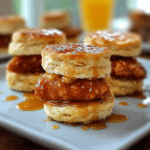
Hot Honey Chicken Biscuits: A Professional Guide to Southern Comfort with a Spicy Sweet Finish
- Total Time: 50 minutes
- Yield: 4 servings
Description
Hot Honey Chicken Biscuits are crispy fried chicken tucked inside buttery biscuits and drizzled with sweet and spicy hot honey for the perfect sweet-savory bite.
Ingredients
- For the Chicken:
- 4 boneless skinless chicken thighs (or breasts)
- 1 cup buttermilk
- 1 cup all-purpose flour
- 1 tsp paprika
- 1 tsp garlic powder
- 1 tsp salt
- 1/2 tsp black pepper
- Vegetable oil for frying
- For the Biscuits:
- 2 cups all-purpose flour
- 1 tbsp baking powder
- 1/2 tsp baking soda
- 1/2 tsp salt
- 6 tbsp cold unsalted butter, cubed
- 3/4 cup buttermilk
- Or use store-bought biscuits
- For the Hot Honey:
- 1/2 cup honey
- 1–2 tsp red pepper flakes
- 1 tsp apple cider vinegar (optional)
- Pinch of salt
Instructions
- Marinate chicken in buttermilk for at least 30 minutes.
- Mix flour, paprika, garlic powder, salt, and pepper in a bowl.
- Remove chicken from buttermilk, dredge in flour mixture.
- Fry chicken in hot oil for 4–5 minutes per side until golden and cooked through. Drain.
- Mix biscuit dry ingredients, cut in butter, then add buttermilk until just combined.
- Shape dough, cut biscuits, and bake at 425°F (220°C) for 12–15 minutes.
- Heat honey with red pepper flakes, vinegar, and salt for 1–2 minutes to make hot honey.
- Slice biscuits, add fried chicken, drizzle with hot honey, and assemble.
Notes
- Do not overmix biscuit dough for fluffiness.
- Adjust spice level in hot honey to taste.
- Let fried chicken rest before assembling for crispiness.
- Prep Time: 25 minutes
- Cook Time: 25 minutes
- Category: Breakfast / Dinner
- Method: Fry & Bake
- Cuisine: Southern American